Stroke length can have a major impact on how your machine feels, hits, and performs in the skin. But with different procedures, techniques, and machine setups to consider, choosing the right stroke isn't always straightforward. But whether you’re years into your craft or still building your fundamentals, mastering stroke length is critical to unlock a new level of control.
Here's a closer look at how stroke length works, and how it interacts with other settings, so you can use it more confidently.
What Is Stroke Length, Really?
Stroke length is the distance your needle travels up and down during each cycle of the machine. It's measured in millimeters (mm), and it's one of the factors that shapes how your machine feels and interacts with the skin.
Measuring Stroke Length in PMU
PMU stroke lengths generally range from about 1.8mm to 4.0mm. As a general guideline, shorter strokes fall around 1.8–2.5mm, medium strokes around 2.7–3.0mm, and longer strokes at 3.5mm and above.
These ranges aren't hard rules. Your technique, hand speed, needle configuration, and the skin you're working on all play a role in finding the right stroke for a procedure.
Shorter Stroke versus Longer Stroke: Which Is Optimal?
Here's the part that trips people up: the stroke length that’s “optimal” changes according to your procedure, technique, and preference. Moreover, stroke length is different from needle depth, which is how deeply your needles are penetrating the skin. Consequently,l needle depth is a totally different conversation (more on that below). Overall, your stroke length influences your needle's movement and impact—so what’s optimal for you will vary.
Here’s a quick guide to how different stroke lengths work:
- Shorter strokes (around 1.5–2.0mm) tend to feel softer and more controlled, giving you a gentler needle movement that can be useful for delicate techniques and detail work (brows, hair strokes, pixellation, etc.)
- Medium strokes (around 2.1–3.0mm) offer a balance of control and impact, making them a versatile option for multiple procedures
- Longer strokes (around 3.1mm and above) tend to deliver a more pronounced hit and stronger needle impact, helping you achieve more efficient pigment implantation when the technique calls for it.
Matching Stroke Length to the Procedure

Every procedure asks something slightly different from your machine. Use this as a starting-point cheat sheet, then adjust to your own hand and your client's skin. Bear in mind, these are general guidelines, and what works for you may not work for another artist. Mastering stroke length, as with anything, comes down to professional practice and experimentation (after you understand the basics, of course).
|
Procedure |
Stroke Length That Often Works |
Why It Works |
|
Brows: Powder, pixel shading, ombré |
Short to medium (around 1.8–2.8mm) |
More control and softer pixelation on detailed, delicate work |
|
Brows: Saturated or faster machine shading |
Medium to longer (around 2.8–3.5mm) |
Stronger pigment packing and quicker coverage |
|
Lips: Lip blush, full color |
Medium to longer (around 2.5–3.5mm) |
Efficient, even saturation across the whole lip |
|
Eyeliner: Lash enhancement, classic liner |
Short to medium (around 1.8–2.8mm) |
Precision and accuracy in a sensitive area |
|
Eyeliner: Shaded or smoky liner |
Medium (around 2.5–3.0mm) |
Builds saturation while keeping the finish soft |
Brows
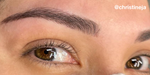
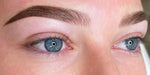
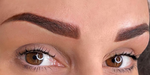
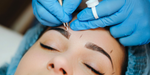
Brows reward precision and a lighter touch. Shorter strokes are a common choice for powder, pixel shading, and ombré effects, where softness and control matter most. When you're after a bolder, more saturated look or working faster through machine shading—a longer stroke length can help you pack pigment more efficiently. In short: shorter for softness, longer for saturation.
Lips
Lips usually need more saturation and consistency, even color. Medium-to-longer strokes help you pack pigment efficiently and carry that color across the full lip for a smooth lip blush. Just keep one eye on balance—enough saturation to heal beautifully, without overworking the tissue.
Eyeliner
The eye area is delicate, so control is everything. Shorter strokes give you the accuracy and softness that lash enhancement and classic liner call for. As you move into shaded or smoky styles, you might reach for a slightly longer stroke to build saturation—while still protecting that sensitive skin.
Stroke Length Is Not Needle Depth (The Mix-Up Worth Clearing Up)
This is where a lot of artists get tangled. Stroke length and needle depth sound like the same idea, but they're controlled by three completely different things.
|
What It Controls |
The Factor |
|
How far the needle travels up and down |
Stroke length |
|
How far the needle is exposed past the cartridge tip |
Needle hang (protrusion) |
|
How deeply the needle actually enters the skin |
Your hand pressure |
Your best work happens when you adjust stroke length and needle hang together, matched to your technique.
If depth is the piece you want to master next, our guide to PMU needle depthOpens a new window walks you through finding that sweet spot for cleaner healed results.
Swappable Cams vs. Adjustable Stroke
Traditionally, changing your stroke length meant swapping a physical cam or wheel inside the machine. It works—but it comes with friction. Adjustable-stroke machines take a different approach and let you dial in your setting directly.
|
Swappable Cams / Wheels |
Adjustable Stroke |
|
|
Changing stroke |
Swap out a physical part |
Adjust on the machine itself |
|
Between procedures |
Downtime to change over |
Fine-tune on the fly |
|
What you keep on hand |
Multiple cams |
One machine |
|
Versatility |
Fixed to each cam |
Adapts to many styles |
One important note: Adjustable stroke doesn’t mean more power. It changes the distance your needle travels with each cycle, giving you more control over how your machine responds in the skin.
The Case for Fixed Stroke Lengths

For PMU artists, that flexibility is less about switching between every procedure in your menu and more about dialing in your ideal setup. A softer stroke can give you a lighter, more controlled feel for delicate work, while a longer stroke can provide more impact and efficient pigment implantation when you need it. Instead of adapting your technique to a fixed machine, you can adjust the machine to better match your technique.
However, some artists still prefer a fixed-stroke PMU machine. In fact, some have multiple machines for different kinds of procedures. It all comes down to personal preference.
One Machine, Every Procedure: The Microbeau E.L.B.
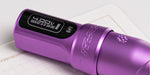
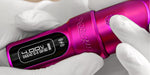
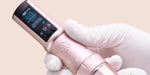
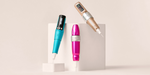
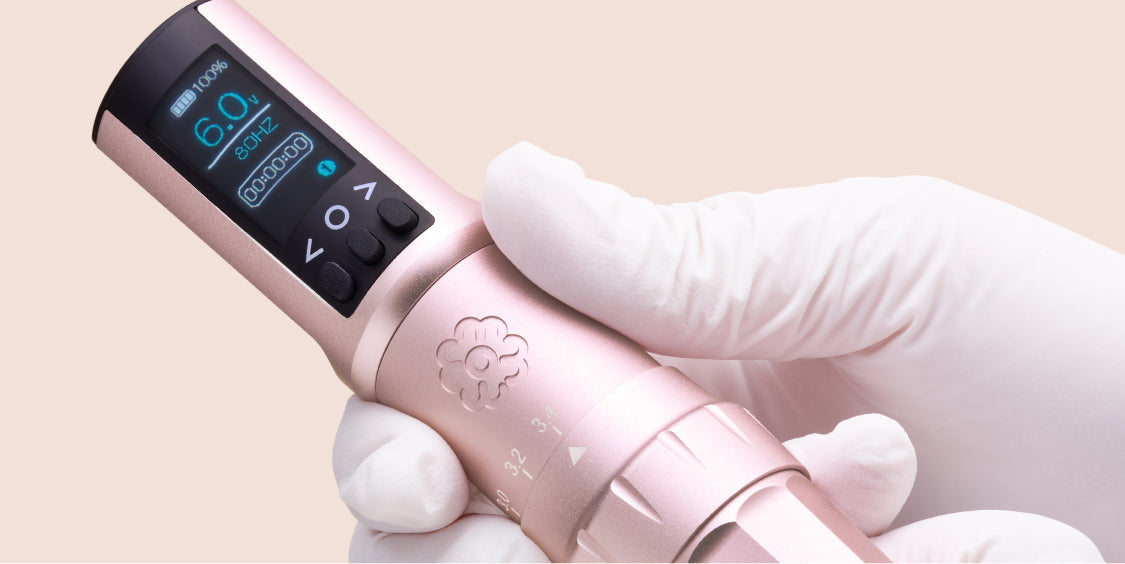
The Microbeau E.L.B. brings this level of customization to PMU with an adjustable stroke range from 2.2mm to 3.4mm. Whether you prefer a softer, more controlled approach or a stronger hit for building saturation, the E.L.B. lets you fine-tune your machine without needing multiple setups.
And for artists who are expanding their services, adjustable stroke gives you room to grow. A machine that can adapt as your skills, techniques, and preferred procedures evolve means you’re not locked into one feel as your artistry develops.
Ready to Master PMU Stroke Length?
When you're ready to experiment with stroke length and grow into every service you offer, explore the Microbeau machine collectionOpens a new window and find the machine that’s right for you.
Your best work is waiting on the other side of the right setting.