Give is one of several settings that can affect how a PMU machine feels and responds during a procedure. It controls how much the needle mechanism yields when it meets resistance from the skin, which can help you fine-tune your machine’s response for different techniques and areas. The trouble is, lots of artists don’t fully understand give, eGive, or how it benefits them.
Here’s how give works, what eGive changes, and when different settings may be useful.
What Is Give in a PMU Machine?
In tattoo and permanent makeup machines, give is simply the amount of cushion, or gentle flexibility, the needle has when it touches the skin.
Think of it as the room your needle has to softly ease back when it meets resistance. With more give, the needle yields gently. With less give, it carries through with a firmer, more direct touch.
Traditionally, give was decided by the physical build of the machine. Springs, membranes, and motor designs all played their part, and the amount of give you received was pretty much set the moment you made your beautiful purchase.
What Is eGive?
Electronic give, or eGive, allows you to easily adjust how much cushion the machine provides electronically, rather than relying only on physical parts.
Instead of swapping out parts or buying a second machine, you simply change a setting. The motor softly adjusts the way it handles resistance, and your needle beautifully follows. A single machine can feel soft and forgiving for one client, and then firm and exact for the next.

Mechanical Give vs. eGive: What's the Difference?
Both mechanical give and eGive give you “cushion.” They affect how much the needle mechanism yields when it meets resistance from the skin. The main difference is how that response is created and adjusted.
- Where it comes from. Mechanical give comes from the machine’s physical components and how they respond under resistance. eGive uses electronic motor control to adjust the machine’s response to the skin.
- How you adjust it. Mechanical give may be fixed or adjustable depending on the machine. On machines with eGive, you can change the level electronically through the machine’s controls, including during a procedure.
- How consistent the setting is. Mechanical systems rely on physical components, which can change with adjustment and wear over time. eGive provides electronically controlled, repeatable settings without requiring a mechanical adjustment.
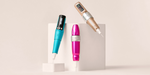
Neither approach is automatically better. Mechanical give contributes to the way a machine naturally hits and responds, while eGive gives artists another way to fine-tune that response. On machines like the Bellar Air, for example, increasing eGive produces a softer hit, while decreasing it produces a harder, more direct hit.
Why Give Matters in Permanent Makeup
More give allows the mechanism to yield more under resistance for a softer response, while less give creates a firmer, more direct hit.
That can be useful in PMU because both the treatment area and your client’s skin affect how well your machine cooperates with you. For example, eyelid skin is thin and delicate, lips have different tissue characteristics, and brow skin can vary considerably in thickness, texture, oiliness, and elasticity. Additionally, mature or compromised skin may require further adjustments to technique. Enter, give: which can help you navigate these variances.
The amount of give you prefer can also depend on the technique. An artist may choose a firmer response for precise, defined work or more give when they want a softer response for shading and layering. There isn’t one correct setting—the goal is to find a machine response that works with your hand speed, needle configuration, and technique.
Give also works alongside factors like voltage and needle depthOpens a new window. Changing one variable can affect how the machine feels and performs, so adjust deliberately rather than treating any single setting as the key to pigment implantation.

More Give vs. Less Give: How Each One Feels
Neither setting is superior. They simply do different things beautifully.
|
More Give |
Less Give |
|
|
Needle response |
Softer, with more recoil |
Firmer and more direct |
|
Response to resistance |
Yields more when the needle meets resistance |
Yields less for a harder hit |
|
What it supports |
Softer shading, layering, and a gentler approach |
Defined strokes, lining, and techniques that benefit from a firmer hit |
How to Adjust eGive on the Bellar Air
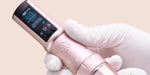
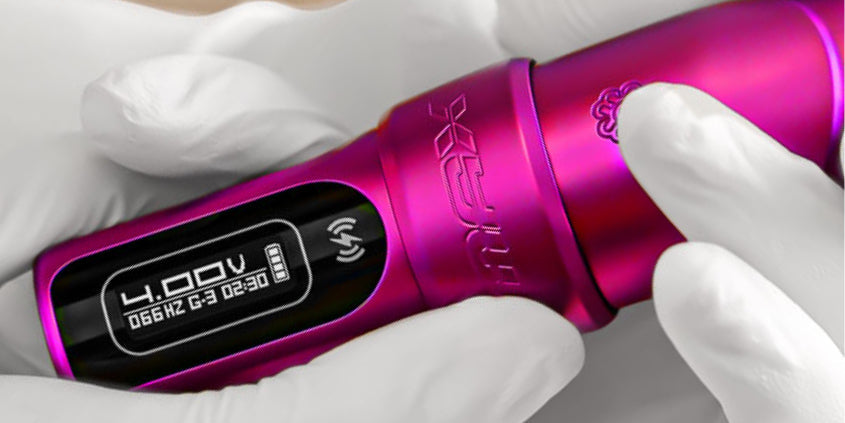
The Bellar AirOpens a new window keeps eGive within its onboard settings, so you can change it without interrupting your flow. Enter the settings menu on the machine, move to the give option, and select the level you'd like. The change takes effect immediately, which means you can test it on the spot and refine again if needed.
MJ Angel walks through exactly where to find it, and how it transforms the feel of the machine:
Opens a new window
How to Adjust eGive on the Flux S Max
The Flux S MaxOpens a new window follows the same principle. Enter the machine's settings, locate the give control, and move through the available levels until you arrive at the response you want. Because it's electronic, you can shift between softer and firmer settings within a single appointment as you move from one area or technique to another.
Both machines are designed so this adjustment takes only seconds. That's very much the point. Give is meant to be used, not set once and forgotten.
Find The Best Setting For You
The true goal is to find the give setting that works for you, and often that changes.
Some artists settle right into one or two trusted levels. Others love to adjust their give continually across a single session. Both approaches are perfectly valid, because the right answer simply depends on your hand, your unique technique, and your client.
Treat give just like you would stroke lengthOpens a new window. It's a small setting with a genuine influence over your healed results.