A clean application doesn’t always guarantee a consistent heal. When pigment returns lighter, uneven, or less saturated than expected, the difference can come down to something deceptively simple: hand speed.
What Is Hand Speed, Really?
Hand speed refers to how quickly you move your PMU machine across the skin during each stroke, pendulum motion, whip, circle, or pass. Overall, hand speed determines how closely each needle contact lands in the skin, directly influencing pigment density, saturation, and trauma. But it never works in isolation. Machine speed, stroke, needle configuration, pressure, stretch, technique, and skin type all affect the equation.
Understanding how these variables work together gives you greater control over both your application and the healed result.
Hand Speed and Machine Speed: The Partnership That Matters

Machine speed controls how quickly the needle cycles. Depending on the device, you may adjust it through voltage, hertz, or another speed setting.
Hand speed determines how quickly you move those cycles across the treatment area. The relationship between the two affects how densely you work the skin: move too quickly for your machine speed and you may leave insufficient coverage; move too slowly and you may repeatedly work the same area, increasing trauma without improving the result.
The goal isn’t simply more needle contacts. It’s finding the balance between machine speed and hand speed that gives your technique the coverage it needs with controlled, efficient passes.
- Quick hand + slower machine speed: The needle may make fewer contacts across the area, resulting in broken strokes, uneven pixel density, or lighter saturation.
- Slow hand + faster machine speed: More needle contacts can concentrate in a smaller area, increasing the risk of redness, swelling, and unnecessary trauma.
- Controlled hand + supportive machine speed: Hand and machine speed work together to create the intended pigment density without unnecessarily working the skin.
Also, the same voltage won’t feel identical across every machine. Motor behavior, stroke, and give shape the response. A side-by-side PMU machine comparisonOpens a new window can clarify those differences before testing a new setup.
Adjustable give also changes the needle’s response under resistance. Our guide to give and eGiveOpens a new window explains why a familiar movement may suddenly feel softer or firmer.
Matching Hand Speed to the Procedure
Every procedure asks something slightly different from your hand and machine. Use these points as a starting place, then adjust to the technique and the skin in front of you.
Fine Hairstrokes
Machine hairstrokes need a smooth, continuous pace. Move too quickly, and the line may look faint or broken. Move too slowly, and it may become heavy or overworked. Keep the pace consistent from base to tail to avoid uneven weight.
Pixelated Powder Brows
Powder work relies on controlled spacing and gradual buildup. Lighter, quicker movements can help create more open coverage, while a more measured pace can build greater density through the body of the brow. Adjust hand speed alongside machine speed, pressure, and movement pattern rather than relying on speed alone to control pixel density.
Lip Saturation
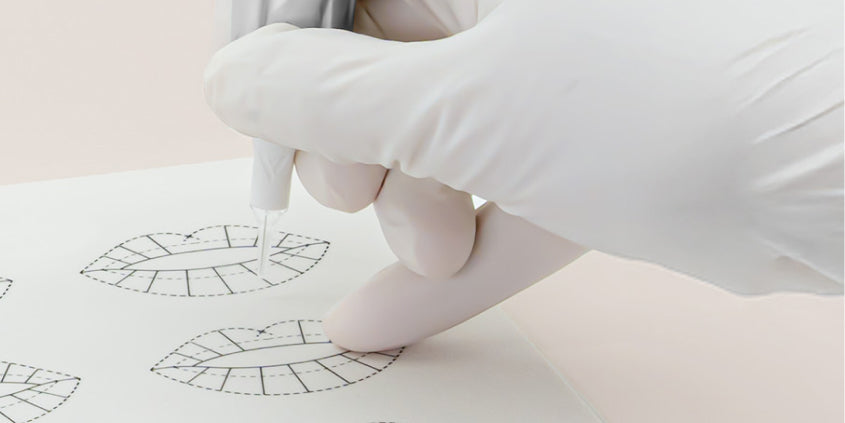
Lips call for even coverage, but slower doesn’t always mean better. Work in organized sections with a small overlap between paths. This helps prevent untreated strips without repeatedly working tissue that may already be swelling or releasing lymph.
Eyeliner
Eyelid skin is thin, mobile, and beautifully unforgiving. Use short movements with secure support. If the deposit looks weak, check stretch, angle, pigment flow, and depth before slowing down or adding pressure.
Needle Choice Changes the Equation
There’s another factor that affects your hand speed: your needle choices.
Your usual hand speed won’t perform exactly the same with every cartridge. Needle count, diameter, configuration, taper, membrane tension, and pigment flow all affect how much coverage you create as your hand moves across the skin.
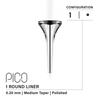
A single needle concentrates each contact in a smaller area, while a larger grouping distributes contact across a wider area. Change the cartridge without adjusting your movement, and the same hand speed can produce a different deposit, density, and skin response.
When working with a new configuration, pay attention to how efficiently it deposits pigment before automatically speeding up or slowing down. Practice skin can help you see how different liners, shaders, and other groupings respond to the same movement before you work on a client.
Stroke versus Hand Speed
Change your stroke length, and your usual hand speed may also need to change with it. Stroke affects how the needle delivers force and interacts with the skin on each cycle, which can change how efficiently pigment builds as you move.
After adjusting stroke, watch how the skin and pigment respond at your usual pace. If the deposit builds too quickly or too slowly, reassess the relationship between hand speed, machine speed, and technique rather than compensating with pressure or repeatedly working the area.
For a deeper look at the relationship between stroke and healed results, our guide to PMU stroke length and healed resultsOpens a new window breaks down how different strokes support brows, lips, eyeliner, and shading.
Is Your Hand Moving Too Fast or Too Slowly?
Your hand may be moving too quickly when you see:
- Broken or faint hairstrokes
- Pixels spaced farther apart than planned
- Patchy color after a complete pass
- Areas that need repeated tracing
- Healed results that look lighter than intended
Your hand may be moving too slowly when you see:
- Redness or swelling building quickly in one area
- Increased pinpoint bleeding
- Dark spots at the start, turn, or end of a movement
- Strokes or borders becoming heavier than planned
- Skin becoming harder to work with each pass
These signs are clues, not a final diagnosis. Poor stretch, unsuitable needle choice, inconsistent depth, limited pigment flow, or an unstable angle can create similar problems.

Practice Like You Mean It
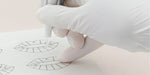
Practice skin is ideal for seeing how these settings work together, and how they influence your hand speed. Keep the machine, stroke, cartridge, pigment, and movement the same, then repeat the pattern at several suitable machine speeds. Next, hold the machine speed steady and test different hand speeds.
Compare spacing, line weight, pixel density, and the number of passes needed. Then repeat the exercise with another needle configuration. This kind of deliberate practice makes cause and effect easier to see (and saves plenty of guesswork later).
Move With More Control
When your hand speed and machine response work beautifully together, you can build saturation with intention, protect the skin, and create more reliable healed results.
Check our best-selling PMU machinesOpens a new window and find a setup designed to move with your technique, your services, and the artist you’re becoming.